
Football Legacy Manager 25
Hockey Legacy ManagerSports
4.033.00 Reviews
- Version
- 25.1.19
- Installs
- 10.00K
- Age Rating
- Everyone
Screenshots
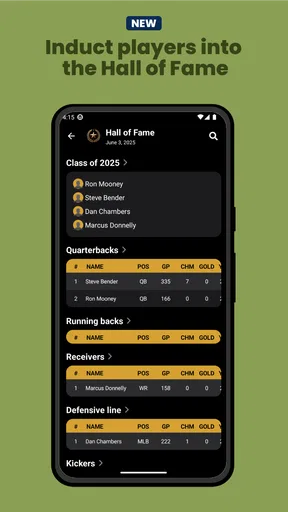
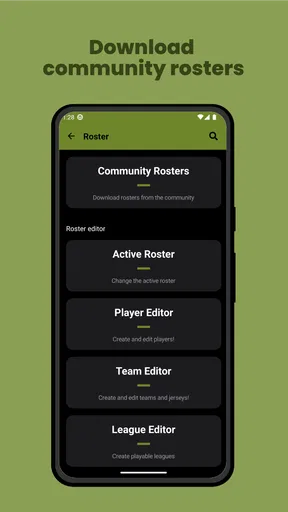
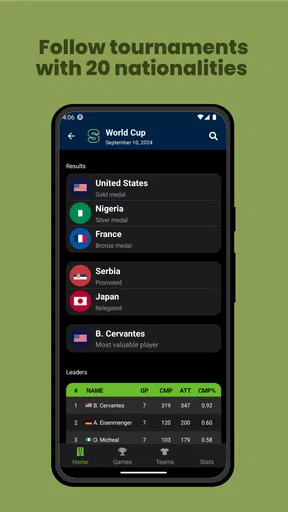
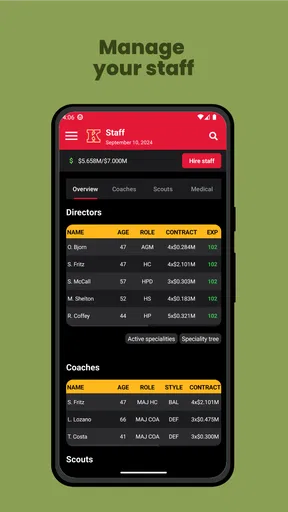
Our Review of Football Legacy Manager 25
 Analysis by Appyee
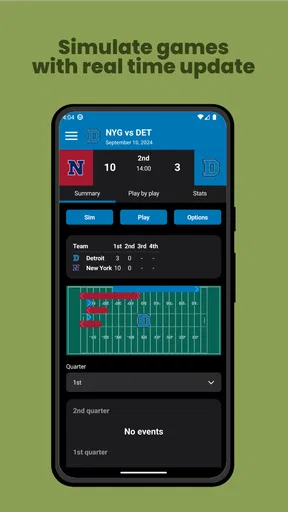
I approached Football Legacy Manager 25 as a sports management game rather than a traditional football title. There is no emphasis here on controlling players during a match; the appeal is stepping into the general manager role and making the decisions that shape an American football team over time. That distinction matters immediately. If you want quick action, this is not the same kind of experience as an arcade football game. If you enjoy planning, comparing options and living with the consequences of a roster decision, it has a much more thoughtful rhythm.
The game is free to download, and it comes from Hockey Legacy Manager, a developer name that makes the focus on long-term team building easy to understand. It sits in the sports category, carries an Everyone age rating and runs on Android devices using version 6.0 or later. At the time of my review, the current version is 25.1.19. Its average score is 4.0 from over a hundred ratings, with several dozen written reviews, while the install count has passed ten thousand. Those figures suggest a small but interested audience rather than a huge mainstream community.
My overall impression is that the game is best understood as a quiet, decision-heavy football sandbox. I found myself spending more time thinking about the next move than tapping rapidly. That can be relaxing when I have a few minutes to study a situation, but it can also feel slow if I am looking for constant visual excitement. The most important question is not whether the game has enough action; it is whether you enjoy being responsible for the structure behind a team.
How the management experience reads and navigates
I found that the key to understanding this game is how its management-first approach changes what I pay attention to: instead of reacting to action on the field, I pause to consider the team and the choices in front of me. This section looks at how that information-led rhythm affects navigation, especially when I’m deciding what deserves attention first. It also sets up the practical question of how that reading load feels in different situations.
A screen built around decisions rather than spectacle
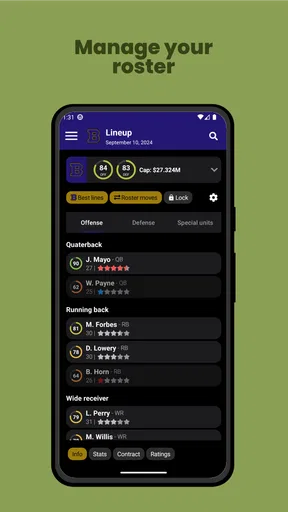
The first thing I noticed was how much the experience depends on reading information and moving between management choices. A general manager needs to understand the state of a team before making changes, so the useful part of the game is not a dramatic presentation but the way the available information supports a decision. I approached each session by checking the situation first, then deciding whether a change was actually necessary. That habit is more rewarding here than making moves simply because a button is available.
This structure gives the game a clear advantage over many casual football alternatives. In an arcade-style game, the main feedback is usually immediate: a successful play, a score or a missed opportunity. Here, feedback is more gradual. A decision may only make sense after several stages of team development, which encourages me to think in terms of a plan rather than a single result. It also means that new players should resist changing everything at once. If the team improves or declines, it is much easier to understand why when I make one meaningful adjustment at a time.
I found the management format particularly suitable for short, focused sessions. I could open the game, review the current problem and make a small set of decisions without needing to commit to a long action sequence. That makes it a reasonable companion during a commute, a break or a quiet evening. The trade-off is that the experience can feel less immediately rewarding than a game that lets me play a full match directly.
Learning the vocabulary without rushing
People who already follow American football will probably settle in faster because the team-building context feels familiar. For someone who mainly knows football through console action games, the adjustment is different. The challenge is not controlling a player; it is understanding why a roster choice, a development decision or a longer-term plan matters. I recommend treating the first sessions as orientation rather than trying to build the perfect team immediately.
One useful approach is to keep a simple mental note of the team’s biggest weakness before making a change. If I identify the problem first, the menus become tools for solving it instead of a collection of options to browse. This is a small but important distinction: the game becomes clearer when I ask, “What am I trying to fix?” rather than, “What can I tap next?”
The interface also benefits from a patient reading style. Players who prefer large visual prompts, minimal text or very obvious next steps may need more time to feel comfortable. I would not recommend starting while distracted, especially if the goal is to understand the logic behind a decision. The game rewards attention, and that is both its identity and one of its first barriers.
Why careful navigation matters for long-term play
A management game can become confusing when every decision is treated as equally urgent. I had better results when I separated immediate concerns from longer-term ambitions. A short-term adjustment might help the next stage, while a broader plan may only pay off after several decisions. Keeping those two levels apart made the experience feel less cluttered and reduced the temptation to react emotionally to one disappointing outcome.
This is also where the game differs from a typical sports title. There is no need to master rapid controls, but there is a need to remember context. I had to pay attention to what I had already changed and why. That makes the game accessible to players who dislike fast reflex tests, but it may frustrate anyone who wants every session to stand alone without remembering previous choices.
Motor, sensory and situational considerations
The slower pace can make the game feel less demanding on reflexes, but it shifts the effort toward sustained attention and interpreting what is on screen. I’ll consider how that distinction matters for players who tire easily, prefer quieter games, or need to adjust their device for comfortable reading. Those factors lead naturally to the next question: whether the same style works when play is interrupted or squeezed into spare moments.
A calmer alternative to reflex-based football
From a motor perspective, the management format is potentially more comfortable than direct football gameplay. I did not need to coordinate rapid movement, timing-heavy controls or repeated bursts of action. The central activity is selecting options and reviewing information, so players who avoid sports games because of reflex demands may find this approach more approachable.
That does not mean the experience is effortless for every player. Tapping through information and making repeated selections can still become tiring, particularly during a long planning session. The game’s suitability will depend on how comfortable someone is with reading screens and performing ordinary touch interactions. I would describe it as less physically demanding than an action football game, not as universally easy to operate.
For players with attention-related needs, the slower pace can work in two opposite ways. It gives me time to pause and consider a decision, which is helpful when fast reactions are a problem. At the same time, a large number of choices or a less obvious priority can make it difficult to maintain focus. I found that setting one goal for a session helped: improve one area, review the result and stop before decision fatigue took over.
Reading load is the central sensory issue
The main sensory consideration is visual and informational rather than loud or physically intense. This is a game about interpreting what is on the screen. Anyone who struggles with dense text, small interface elements or low contrast should test the game carefully on their own device before committing to extended sessions. I cannot treat the Everyone rating as proof that every screen will suit every visual or cognitive need; age suitability and accessibility are different questions.
I also think the game is better suited to players who can control their environment. In a noisy room or while multitasking, it is easy to lose the thread of a decision. The game does not provide the same kind of constant audiovisual urgency as a match-focused title, so sound is not the main reason to play. That can be a benefit for people who prefer quieter games, but the information on screen still deserves undivided attention.
A practical routine helped me here. I would play with the screen brightness set to a comfortable level, enlarge the device’s general text settings when possible and take a break after completing a clear management task. Those are device-level adjustments rather than special functions of the game, but they make a meaningful difference when the experience is built around sustained reading.
Who benefits from the slower control style
I would recommend this control style to someone who likes making choices at their own pace and does not want success to depend on quick fingers. It can also suit a player who enjoys discussing decisions with a friend, because the pauses create room to explain why a particular direction seems sensible. A younger player may enjoy the team-building idea, but an adult may need to guide them through the management concepts if American football is unfamiliar.
On the other hand, I would steer away from it if the main goal is to feel like the athlete on the field. The game cannot replace the physical immediacy of a football simulation or arcade title. Its inclusive strength is the removal of reflex pressure, not the removal of all complexity.
Using the game in different everyday contexts
I get the most from a management game when I treat each visit as a small check-in rather than trying to solve every team concern at once. Here, that approach can help preserve the reasoning behind a choice across a busy day, though interruptions may make it harder to remember why I made an earlier change. The next section looks at the trade-off between calm controls and the mental effort that planning can still require.
A realistic short-session routine
Imagine having ten quiet minutes before an appointment. With a match-focused game, that may be too little time to begin comfortably, especially if stopping midway feels disruptive. With this manager format, I could use the time to inspect the team, identify one concern and make a measured decision. I would not try to redesign the whole organization in that window. The better workflow is to choose one task, finish it and leave with a clear idea of what to review next time.
That approach also reduces the risk of impulsive decisions. When I had only a few minutes, I was more likely to make a change just to feel productive. A simple rule helped: if I could not explain the purpose of a move in one sentence, I postponed it. This is one of the more useful habits for the game because management titles often make activity feel like progress even when the decision has no clear objective.
Playing around interruptions
The slower structure is useful for people whose gaming time is fragmented. A parent, commuter or busy student can return to the team in small portions instead of waiting for a long uninterrupted session. Still, fragmented play has a weakness: it is easy to forget the reasoning behind an earlier choice. I recommend ending each session by noting the next question you want to answer, such as whether the recent adjustment solved the original problem.
This method makes the game more welcoming for players who cannot reserve an entire evening for gaming. It is less suitable for someone who wants to start and finish a complete competitive event in a single sitting. The experience is about continuity, so its strongest moments come from returning to an evolving project rather than clearing a self-contained challenge.
Comparing it with the usual sports alternatives
Compared with an arcade football game, this title offers less immediate excitement but more room for reflection. Compared with a full football simulation, it reduces the demand for precise control and shifts attention toward organization. Compared with a spreadsheet-style management tool, it is still presented as a game, which makes the long-term project more approachable for someone who wants decisions to feel connected to a sports world rather than purely numerical.
That middle position is important. Players who want realistic on-field control should choose a different kind of football game. Players who want only casual tapping may find the planning too involved. The best match is someone who enjoys the idea of building a legacy but prefers to do it through choices, patience and review rather than direct athletic performance.
Where the experience still creates barriers
A game can avoid rapid controls and still be difficult to use comfortably, so I think it is important to separate motor demands from reading, attention and sport-specific understanding. I’ll focus on where that distinction may make the experience frustrating, and on practical ways to approach it without assuming that a slower pace suits everyone. That perspective leads into a more balanced view of who is likely to enjoy the game.
Complexity can be a barrier even when controls are simple
The absence of reflex-heavy play should not be confused with simplicity. I could operate the game without demanding physical speed, yet still feel mentally busy when several decisions competed for attention. That is a meaningful accessibility trade-off. A player with limited hand mobility may appreciate the calmer interaction, while a player who finds dense planning tiring may struggle despite the straightforward tapping.
Newcomers to American football face an additional learning curve. The game’s central fantasy is easy to understand, but the reasoning behind team decisions is not automatically clear to someone unfamiliar with the sport. I would suggest beginning with curiosity rather than trying to imitate expert strategies. Learn what each choice is intended to influence, observe the result and build your own vocabulary gradually.
Free entry does not mean every player will spend nothing
The game is free, which makes it easy to try before deciding whether the management style fits. It includes in-app purchases ranging from $4.49 to $10.99 per item. I see that as a reason to approach the game with a personal spending rule, especially if the long-term progression becomes engaging. A free starting point is valuable, but players who want a completely purchase-free experience should be comfortable ignoring optional spending prompts if they appear during play.
This is also relevant for families. The Everyone rating addresses age suitability, not budgeting or purchasing habits. If a child uses the device, I would set the device’s purchase controls in advance and explain that the game’s core appeal is making decisions, not buying a faster route through them. That keeps the focus on learning the management system.
Small audience, specific appeal
The install figure of over ten thousand and the average rating of 4.0 show that the game has found an audience, but it is not positioned like a universal sports blockbuster. I would take that as a sign to set realistic expectations about community size and mainstream polish. The appeal is specialized: American football management on mobile, with the emphasis placed on building a lasting team identity.
That specialization is a strength for the right person. I would rather see a game commit to a clear management idea than dilute it with unrelated mechanics. But it also means that someone searching for a broad sports package may feel limited. If your interest is specifically in becoming the person behind the team, the focused design is welcome. If you want several sports, constant online competition or a cinematic match presentation, another option will likely serve you better.
My inclusive verdict after spending time with it
The strongest part of Football Legacy Manager 25 is its ability to make football management less dependent on reflexes while keeping the decisions meaningful. I enjoyed the moments when I could slow down, identify a weakness and think about the kind of team I wanted to build. That makes it a good fit for thoughtful sports fans, players with limited tolerance for rapid controls and anyone who likes returning to an ongoing project in short sessions.
Its accessibility story is more nuanced than simply calling it easy. The motor demands are calmer than those of direct football games, but the reading and planning demands remain substantial. Visual comfort, attention span and familiarity with American football will shape the experience as much as hand speed. I would encourage players to use device-level text and display adjustments, play in a comfortable setting and stop after a defined task rather than forcing a long session.
I would recommend it to a friend who says, “I want to run the team, not play every down.” I would not recommend it to someone looking for instant action, a simple pick-up-and-play match or a game that explains every strategic idea without patience. The free entry makes trying it sensible, while the in-app purchase range means families and careful spenders should manage expectations from the beginning.
In the end, Hockey Legacy Manager has created a focused sports game for people who enjoy responsibility more than spectacle. It is not the most universally accessible kind of entertainment, because its information load can still be demanding, but it offers a valuable alternative to reflex-driven football. If you are willing to read, plan and accept that a good decision may take time to show its value, this is a focused choice for building an American football legacy on mobile.
Verdict
Strengths of Football Legacy Manager 25
- Deep squad-building options for long-term career planning.
- Detailed transfer market keeps recruitment engaging throughout a save.
- Matches progress quickly, making seasons easy to manage.
- Large database offers plenty of clubs and players to discover.
- Useful statistics help compare performances and make informed decisions.
Limitations of Football Legacy Manager 25
- The interface can feel crowded on smaller phone screens.
- Some advanced features may take time to understand.
- Long saves can become repetitive without frequent updates.
- Player data and ratings may not always match current real-world form.
- Performance can vary on older devices during larger simulations.
Other Releases by Hockey Legacy Manager
View All
Football Legacy Manager 24
Sports3.5
Similar Picks in This Category
View All
8 Ball Pool
Miniclip.com4.8

Pooking - Billiards City
AIM TOP GAME TECHNOLOGY LIMITED - pool4.6

Carrom Pool: Disc Game
Miniclip.com4.4

EA SPORTS FC Soccer Mobile 26
ELECTRONIC ARTS4.6

World Soccer League
mobirix4.3

Soccer Cup 2026: Football Game
INLOGIC SPORTS - football tennis golf soccer4.3
Frequently Asked Questions
What is Football Legacy Manager 25?
Football Legacy Manager 25 is a football management simulation game focused on building and controlling your own club. You take responsibility for important decisions such as transfers, tactics, training, staff, finances, and match preparation. Rather than playing every moment directly, you guide the team from the manager’s perspective and try to develop a successful club over multiple seasons.
Can I play Football Legacy Manager 25 offline?
Football Legacy Manager 25 is designed primarily as a single-player management experience, and many of its core features can generally be enjoyed without competing against other players in real time. However, some functions may depend on an internet connection, including updates, advertisements, cloud-related services, or license verification. It is best to check the store listing and test the game after installation if offline access is especially important to you.
Is Football Legacy Manager 25 free to download?
The availability and payment model for Football Legacy Manager 25 can vary depending on the platform and region. Before downloading, review the official Google Play or App Store listing to confirm whether the game is free, paid, or supported by optional in-app purchases. Also check whether advertisements, premium features, or additional content are included, so you understand the potential costs before starting a long-term career.
What can I manage in Football Legacy Manager 25?
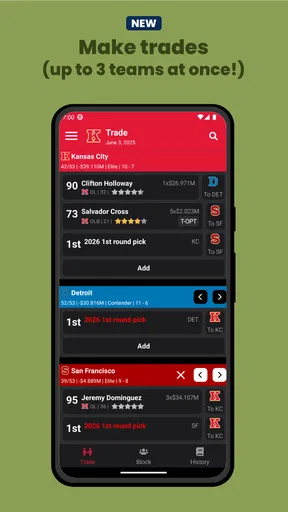
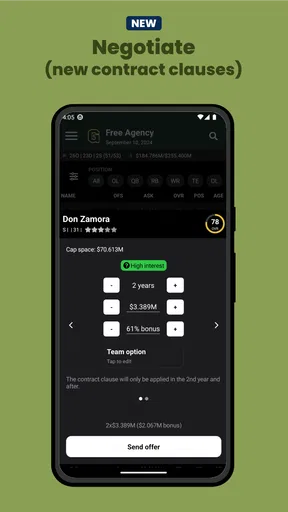
The game offers a broad range of managerial responsibilities rather than focusing only on match results. Depending on the version and platform, you may be able to scout and sign players, negotiate transfers, choose formations, prepare tactics, organize training, manage staff, monitor club finances, and develop young talent. These systems make long-term planning important, because short-term decisions can affect the club for several seasons.
Is Football Legacy Manager 25 suitable for beginners?
Football Legacy Manager 25 can be suitable for beginners who enjoy football strategy games, although the number of management options may initially feel overwhelming. New players should begin by learning the squad screen, tactics, transfers, and finances before changing every system at once. The game is most rewarding for users who enjoy making gradual improvements, analyzing results, and accepting that building a successful club takes time.
Play our best games!


